Karl Loken turned a teacher’s doubt into a career in the cockpit
November 15, 2026
A child dreaming of becoming a pilot may not yet understand the cost of flight training or the years of work ahead.
A teacher’s discouragement can make that ambition seem even further out of reach.
Karl Loken encountered that response at his Scarborough high school. Struggling with mathematics and seeking extra help, he said he was interested in aviation, and someone told him to consider another career.
Years later, at the controls of a Canada Jetlines passenger jet, he landed in Orlando and heard applause from a cabin filled with families and young children.
“The landing was so smooth, and I could hear everyone clapping from the flight deck,” Loken recalled. “The plane was full of families with young children. Looking at the manifest and realizing we had about 50 kids on board made it especially meaningful to get everyone there safely. Hearing that applause as we landed was really cool for me.”
That early jet landing remains one of his most rewarding experiences in the cockpit.
Loken’s route there included years in aircraft parts logistics and management, with roles in Canada and Dubai, as well as four years of flight training while working full time.
Now a first officer with Porter Airlines, Loken understands the persistence and financial commitment required to turn a childhood ambition into a career.
Born and raised in Toronto to a Barbadian mother and Jamaican father, he developed an interest in aviation without a family connection to the industry. His late father worked for the Toronto Transit Commission as an electrical mechanic on subway trains and streetcars.
Although Loken has flown to the Caribbean with other carriers, Porter’s addition of Montego Bay to its network offers the prospect of a meaningful assignment.
He would relish the opportunity to fly there with the airline, connecting his career with his Jamaican roots.
“None of my family members really are part of aviation,” Loken said. “Aviation was something for me very early on, but it wasn’t really influenced by any person that I know of.”
Even a visit to the airport excited him.
Loken’s first flight came under sad circumstances when, travelling as an unaccompanied minor, he went to Barbados for his grandmother’s funeral.
Despite the reason for the journey, his fascination with flying continued to grow.
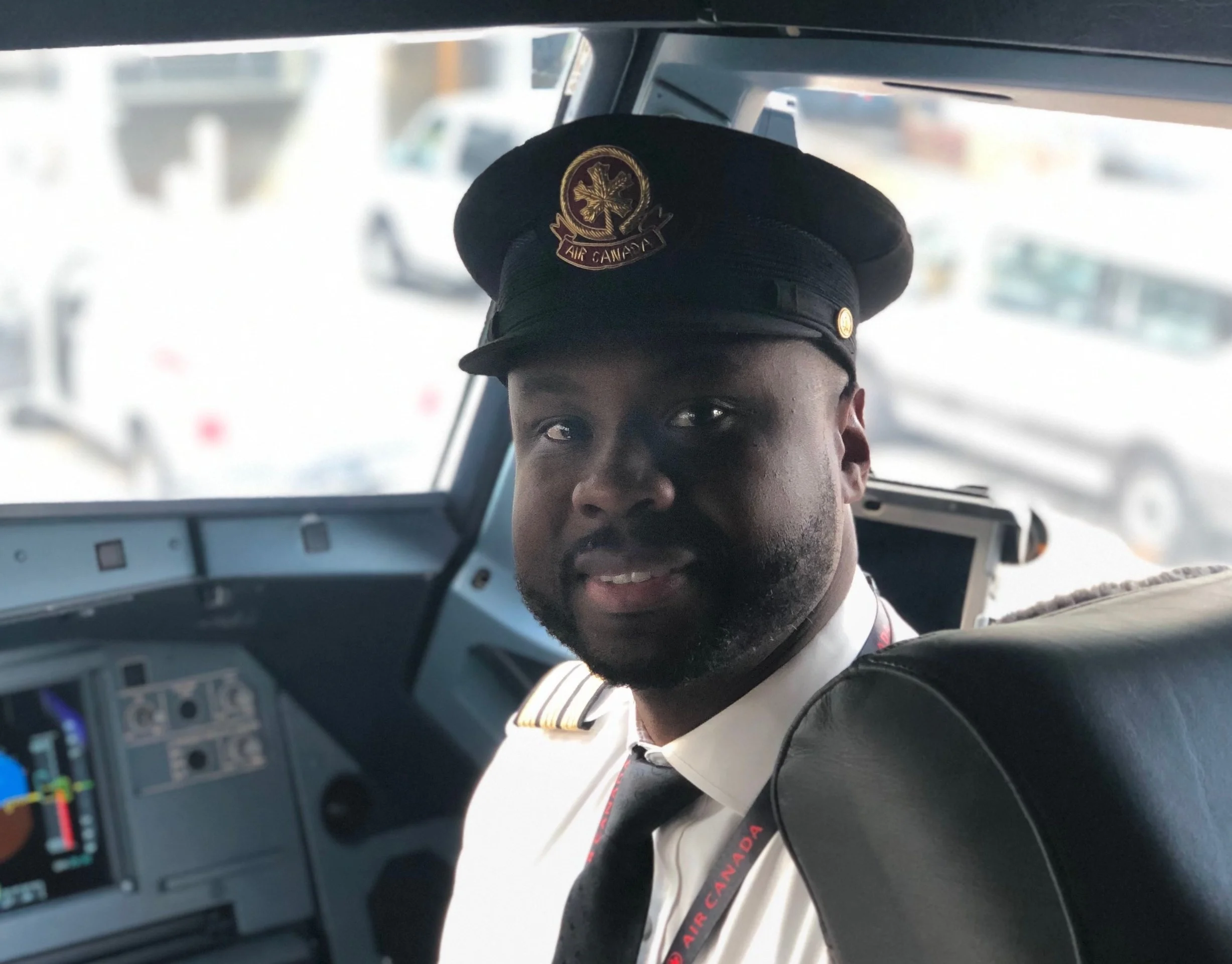
Karl Loken in the cockpit (Photo contributed)
At his Scarborough high school, Loken hoped a co-operative education placement would give him a chance to explore aviation. On an expression-of-interest form, he indicated that he wanted to work in the industry or at an airport.
In Grade 10, a teacher discouraged him from pursuing aviation.
“She told me I didn’t have a high enough IQ to pursue aviation,” Loken recalled. “‘That’s why you’re in this class,’ she said. ‘I suggest you choose something else’.’”
The remark stayed with him along with the conviction that an educator should have offered support.
“She should have been somebody who was helping me and encouraging me to do something better with my life, uplifting me, not putting me down,” Loken said. “Luckily, I was resilient enough to not absorb that as a negative thing and use it more as fuel to prove her wrong.”
His opportunity to enter the industry eventually came through a friend who suggested a job in aircraft parts stores and logistics. Flying lessons were beyond his means, but the position offered another route into aviation.
“I always wanted to fly, but I just didn’t have the money to do it,” Loken pointed out. “Flying was very expensive, so I got into this job, and that ended up taking me on an almost 16-year career in supply chain logistics for aviation.”
Although he studied aircraft maintenance engineering, his work focused on the supply chain supporting maintenance operations. His early duties included storing, collecting and delivering parts, taking them to aircraft at the gate and arranging shipments through cargo facilities.
After about five and a half years with his first employer, Loken moved to Sky Regional Airlines, where he helped establish warehouse and inventory operations.
An opportunity with Emirates took him to Dubai, where he spent nearly four years helping develop materials management operations for the airline’s engine maintenance centre. He also earned an MBA in aviation management while working full time.
Despite that progress, Loken’s ambition to fly remained.
Feeling he had reached a plateau in his career, he returned to Canada in 2018 to pursue flight training while continuing to earn a living.
“I made the decision to move back to Canada and to start my flight training because it was more affordable here,” he said. “I’d be home and I’d be able to work at the same time to continuously pay for this flight training.”
Loken joined Air Canada as a stores duty manager at its Toronto Pearson hub and helped prepare logistics and supply operations for the airline’s Bay 5 hangar. Alongside those responsibilities, he undertook the lessons, studying, examinations and flight tests required for a professional flying career.
As his responsibilities at Air Canada expanded, he continued working towards his place in the cockpit.
Loken continued working at Air Canada through the disruption caused by COVID-19, becoming regional manager of supply chain operations in Toronto, where he oversaw approximately 120 employees. He later advanced to general manager of logistics, with responsibilities spanning Canadian and international locations and more than 300 employees.
By then, he had also completed four years of flight training while managing the demands of his career.
“You can imagine how demanding it was to work in a stressful, full-time management role while spending four years completing my flight training, earning my licences and passing all the required tests,” Loken said.
His first professional flying job was with Voyageur Airways, operating a Dash 8-100 freighter on overnight cargo flights from Hamilton.
About eight months later, the anticipated loss of the cargo contract prompted Loken to seek another position. He moved to Jazz Aviation to fly the Q400 before joining Canada Jetlines as an Airbus A320 pilot.
His assignments took him across Canada, the United States and the Caribbean, while a deployment to Morocco included flights to Europe.
When Canada Jetlines ceased operations in August 2024, Loken steadily advancing career took an unexpected turn. He lost his job.
Porter hired him that November, and he initially returned to the Q400 before moving to its Embraer E2 fleet in May 2026.
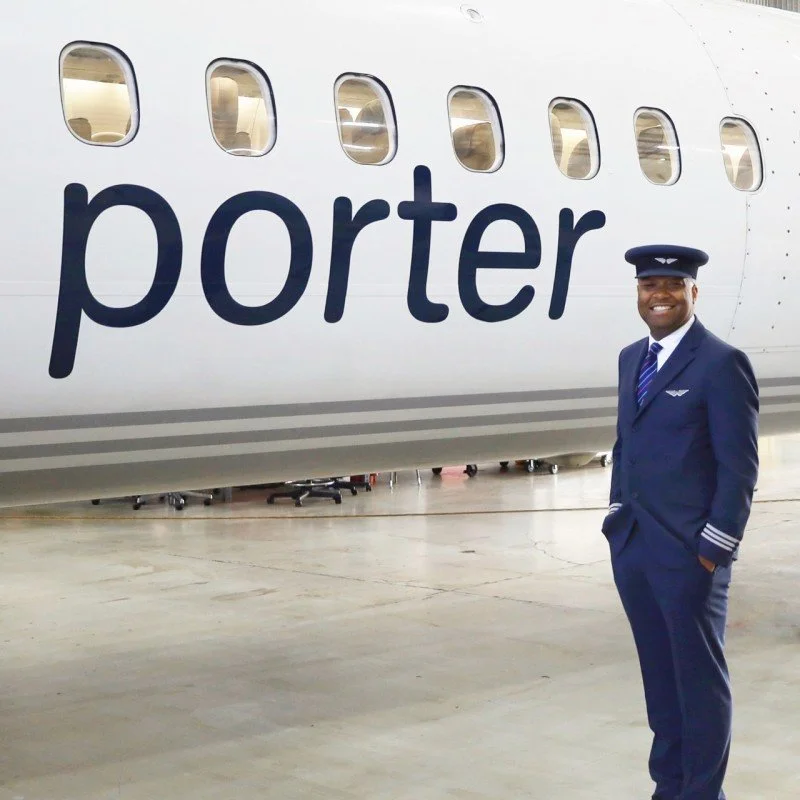
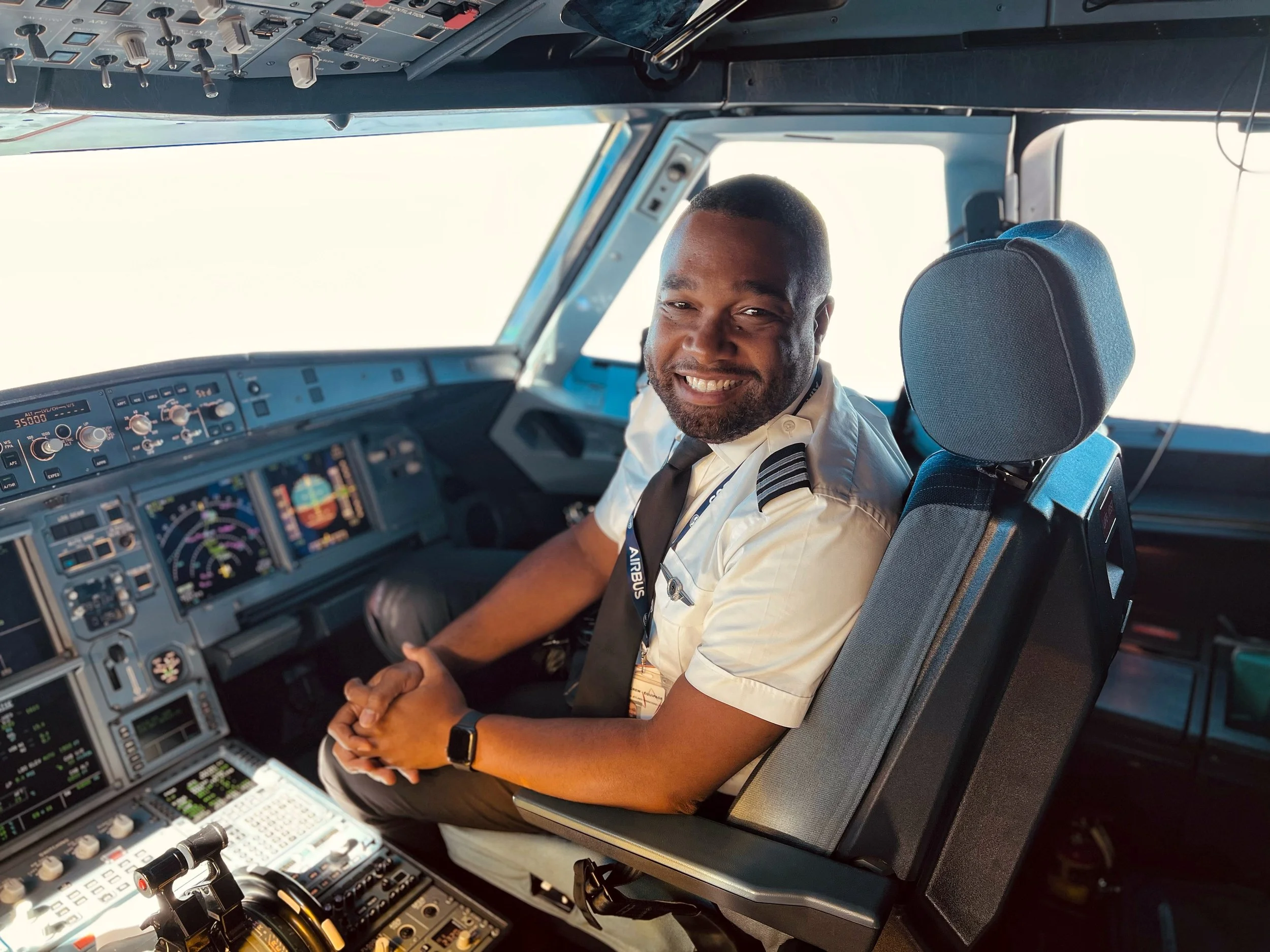
Karl Loken is a First Officer with Porter Airlines (Photo contributed)
Having overcome the financial barrier to his own training, Loken remains concerned about the cost facing aspiring pilots.
He estimates that obtaining a commercial pilot licence, the necessary ratings and associated flight hours can cost about Can$90,000, before living expenses during training.
For aspiring pilots, the cost of training comes on top of everyday living expenses.
“It’s a lot of money, and few people have that amount available,” Loken said. “Many take out large loans or pay as they go throughout their training. The costs add up, even before you factor in everyday expenses such as rent, food, gas and insurance.”
He believes that financial burden can put the profession beyond the reach of capable candidates, regardless of their enthusiasm or willingness to work.
“It deters a lot of people because they just don't have the financial means,” Loken said.
He wants the aviation industry to advocate for broader access to training assistance, including Ontario Student Assistance Program (OSAP) funding for aspiring pilots whose training is not currently eligible.
“What I would love to see is the government being able to give anybody who's trying to become a pilot access to OSAP,” said Loken. “You shouldn't have to be in a college program to have access to OSAP if you're trying to become a pilot.”
He also called for more scholarships, grants and loans from government and other organizations to help make flight training more accessible.
As his own career progresses, Loken is helping young people find their way into aviation.
A long-standing member of the Black Aviation Professionals Network and Urban Pilots and Professionals Network, he shares lessons from his journey through mentorship and encourages young Black Canadians to attend aviation events, volunteer and build relationships within the industry.
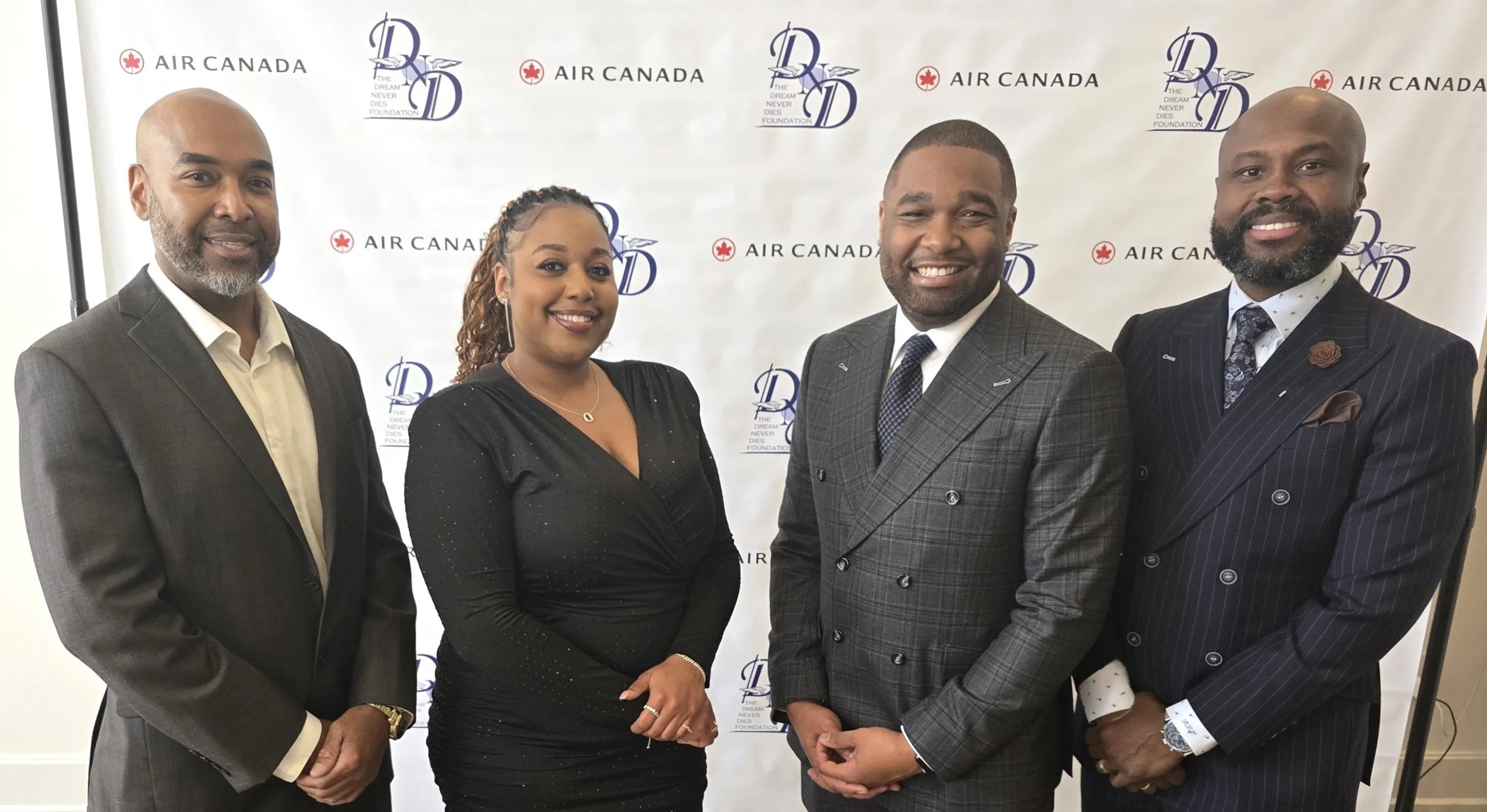
Urban Pilots & Professionals Network senior members Warren Holt (l), Arianna Woodley, Karl Loken and Damar Walker at the 2025 Dream Never Dies annual event (Photo by Ron Fanfair)
That guidance, Loken stressed, is as important as financial support.
“If you don’t know or you’re unsure, ask,” he said. “On paper, getting a pilot’s licence seems straightforward. You attend flight school, get your medical certificate, pass your written exams, build your flying hours and complete your flight test. But there’s much more involved along the way.”
Weather, aircraft and instructor availability can affect a student’s progress, alongside the demands of studying and developing flying skills. A support network can offer practical advice and encouragement through those challenges.
“People don’t always talk about the studying, time and money each step requires,” he said. “Building a network gives you people to turn to for support and guidance throughout your training.”
From delivering aircraft parts to managing international logistics operations and eventually becoming an airline pilot, Loken built a career that defied his teacher’s assessment.
“When you look at everything I have been able to achieve and accomplish so far, it's proven her wrong,” he said. “If you really want something badly enough, you will figure out a way to get it.”
The student, once told to choose another path, now occupies the cockpit he dreamed of reaching.
Loken hopes his journey will help young Black Canadians see a future in aviation and find the support to pursue it.